Sharjah: The 200,000-Year Echo of the Gulf
While the region races toward the sky with glass towers, the third-largest emirate digs deep into the roots of human memory.
Sharjah is not merely a city; it is a timeline. Uniquely positioned bordering both the Persian Gulf and the Gulf of Oman, it serves as the custodian of the region's soul. From the 210,000-year-old tools of Jebel Faya to the coral-stone corridors of the Heart of Sharjah, the emirate rejects the fleeting allure of modernism for a "rooted modernity." Designated as the UNESCO Cultural Capital of the Arab World, Sharjah represents a philosophy where culture is not a commodity, but the very oxygen of civilization.
The Palaeolithic Gateway: Where Humanity Walked First
To understand the Emirates, one must look away from the coastline and towards the limestone shelters of the central region. The Jebel Faya Palaeolandscape, inscribed as a UNESCO World Heritage Site in 2025, rewrites the story of human migration.
Here, the landscape tells a story of when the desert was a savannah. Excavations have revealed hand axes and scrapers dating back between 125,000 and 210,000 years. These are not just stones; they are evidence that early Homo sapiens used this land as their primary corridor out of Africa.
Further inland, the red sands of Mleiha hold the silence of a sophisticated pre-Islamic society. Standing among the monumental "Umm an-Nar" tombs, one can almost hear the bustle of a wealthy caravan kingdom. The earth here has yielded tetradrachm coins imitating Alexander the Great and Rhodesian amphorae—proof that long before oil, this land was a global crossroads.
The Myth of Piracy and the Qawasim Legacy
History is often written by the victor, but the stones of Sharjah tell a different truth. The Al Qasimi dynasty established a formidable maritime thalassocracy by 1727, controlling the Strait of Hormuz and protecting trade routes.
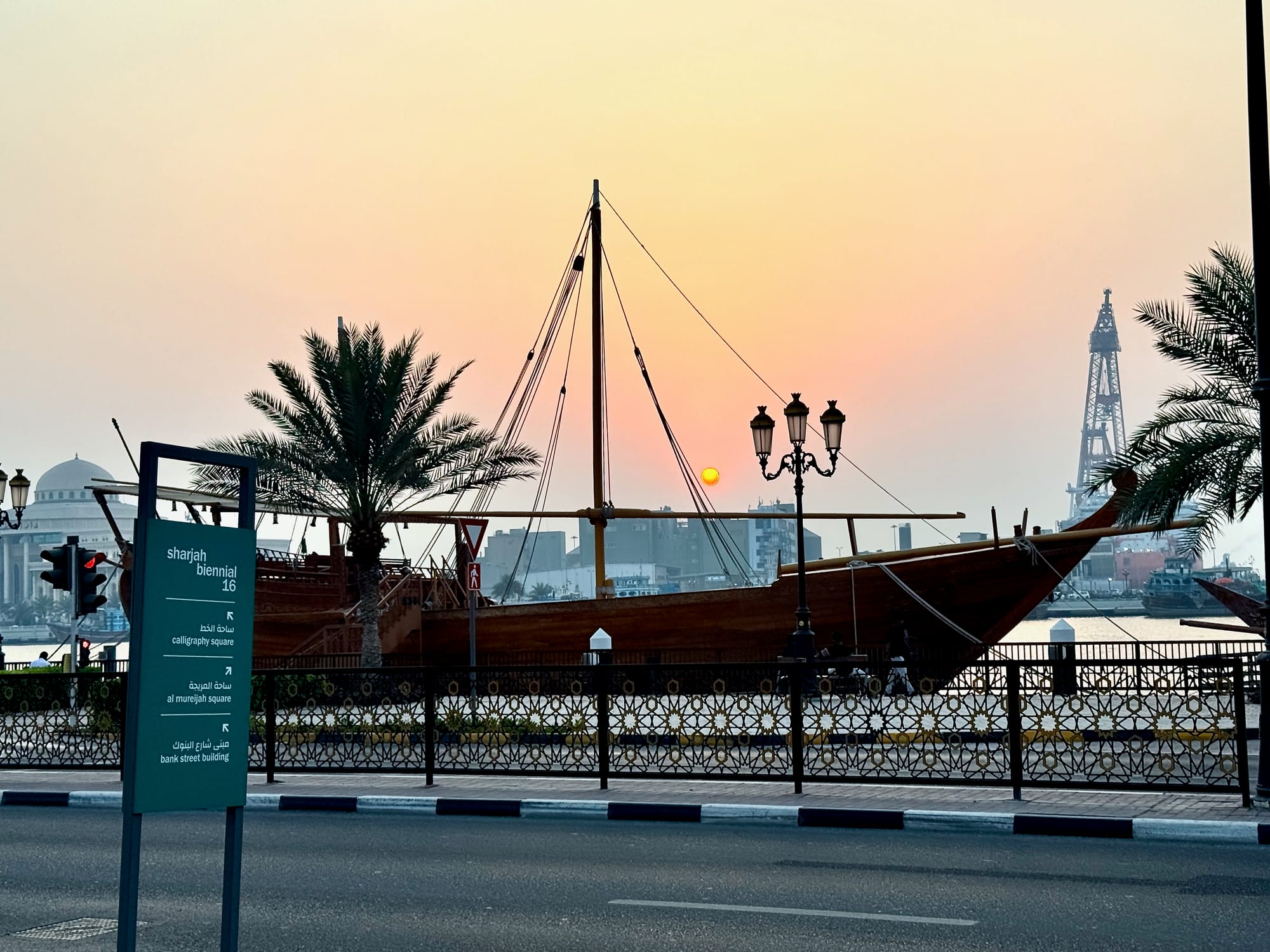
While colonial narratives branded this the "Pirate Coast," rigorous historical analysis—championed by His Highness Sheikh Dr. Sultan bin Muhammad Al Qasimi—reveals this was a defense of sovereignty against the British East India Company's monopoly. The British bombardment of 1819 shattered the coastal fortifications, but it could not erase the maritime identity that still pulses through the emirate today.
A Texture of Coral and Pearls
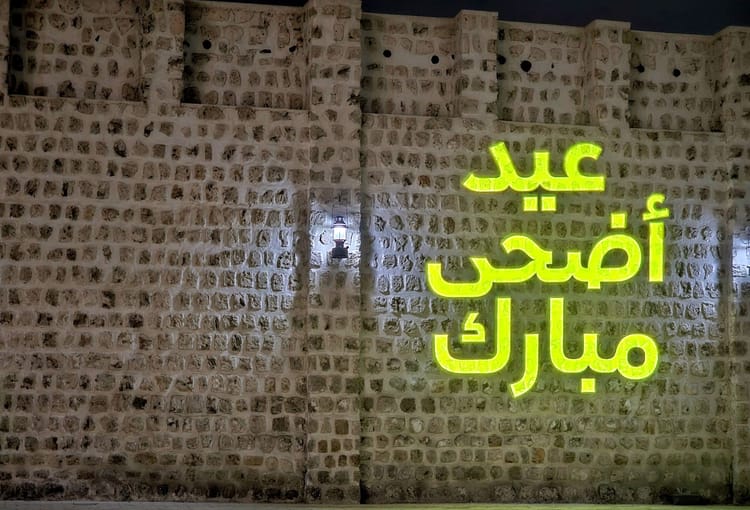
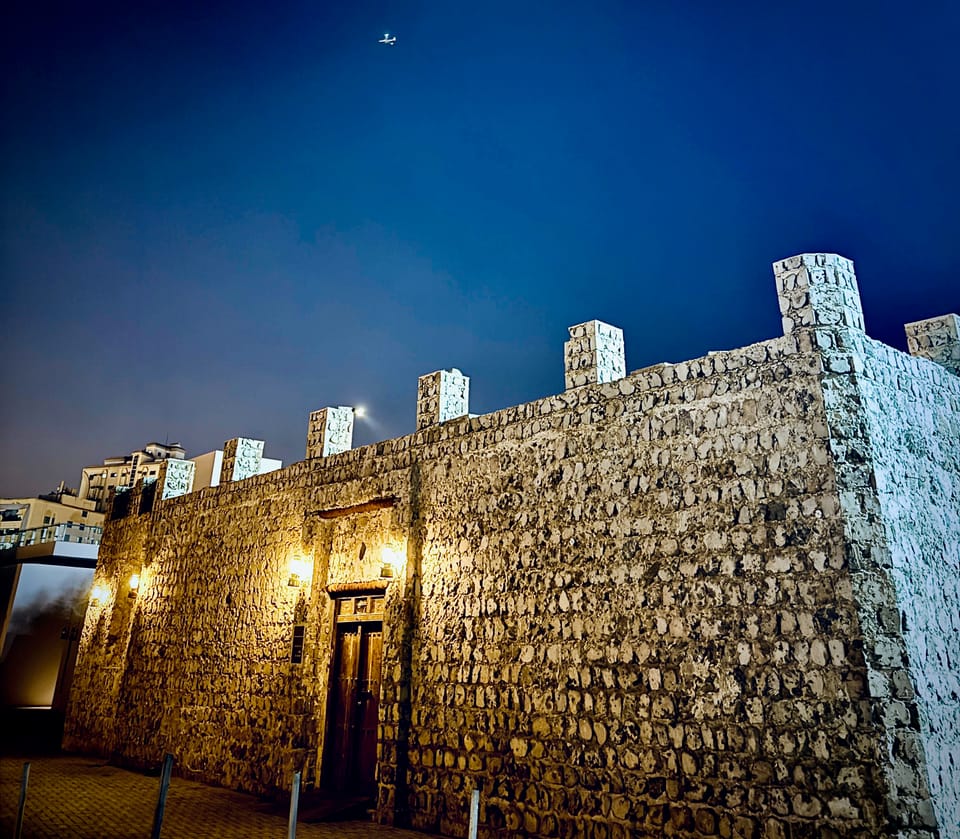
Before the skyline was dominated by minarets, it was defined by the Souq Al Arsa. Walking through it today is a sensory journey into the "Age of Pearls." The walls are built of coral stone, breathing structures chosen for their ability to insulate against the heat, while heavy wooden beams hold up the ceiling.
This era, where 95% of the income relied on the rhythm of the Ghaus (diving season), ended with the dual shock of the 1930s: the Great Depression and the rise of cultured pearls. Yet, Sharjah pivoted. In 1932, Al Mahatta became the first airport in the Trucial States, transforming a maritime hub into an aviation bridge between the West and India.
Concrete Does Not Make a Nation
Since 1972, under the vision of Sheikh Dr. Sultan, Sharjah has followed a distinct path. The motto is clear: "Concrete does not make a nation, it is man who makes it."
You will not find endless forests of glass skyscrapers here. Instead, you find the Blue Souq (Central Souq), with its intricate mosaic tiles and wind-tower silhouettes. You find the Museum of Islamic Civilization, resting under a majestic gold dome. This is "neo-regionalism"—architecture that respects the climate, the history, and the human scale.
As the Heart of Sharjah project nears its completion, stripping away modern additions to reveal the authentic 1950s urban fabric, the message is clear: The future of Sharjah lies in the preservation of its past.
Eyentrue Field Notes: Key Historical Coordinates
- The Ancient Passage: Jebel Faya contains tools dating back 210,000 years, marking the primary route for humans leaving Africa.
- Strategic Geography: Sharjah is the only emirate with coastlines on both the Persian Gulf and the Gulf of Oman.
- The Literary Hub: Home to the world's third-largest book fair (SIBF), reflecting its status as the 2019 World Book Capital.
- Architectural Identity: A rejection of "glass futurism" in favor of restoring traditional coral-and-gypsum districts like the Heart of Sharjah.
Further observation: When documenting heritage sites, the challenge is not capturing what remains, but understanding what was lost. Sharjah's approach—archaeology as a living practice rather than museum display—offers a different model for preservation.
Documentary Behind-the-Scenes
Field-tested techniques, gear notes, and philosophy. Exclusive to subscribers.
Join the EYEnTRUE community